

Last Updated: November 14, 2026
Quick Summary
To shape a balsa surfboard, first choose your blank: solid, laminated or chambered construction, then plan dimensions, rocker and outline before gluing up, cutting the outline, establishing rocker and rails, and refining for glassing. Balsa is not waterproof on its own, so the finished board must be protected with one layer of 4-ounce fiberglass and polyester resin.
- Solid blanks are heaviest and best for beginners, laminated are lighter for intermediates, and chambered suit advanced builders.
- Balsa dust is fine and light, so wear a dust mask and disposable overall while working.
- Leave 3/8" to 1/2" of wall around chambers and a solid rail band at least 1" wide on each side.
- Seal every chamber completely before glassing to prevent trapped moisture, rot or delamination.
- All boards are custom made and handmade in Australia, in Sydney at Cronulla, with no stock kept.
Table of Contents
- Picking Your Balsa Surfboard Blank: Solid, Laminated or Chambered
- Surfboard Shaping Tools and a Safe Work Space
- How to Shape a Surfboard: The Step-by-Step Sequence
- Chambered Wooden Surfboard: Lightening the Core Without Losing Strength
- Troubleshooting Glue-Up and Shaping Errors Before Glassing
- Ordering a Custom Balsa Blank or Shaping Kit from Riley
- Frequently Asked Questions
Picking Your Balsa Surfboard Blank: Solid, Laminated or Chambered
The first decision in how to shape a balsa surfboard is your blank, and the choice shapes everything that follows. At Riley Balsa Wood Surfboards, we've spent over 30 years building and selling balsa boards, and each construction asks something different of your hands and your patience.
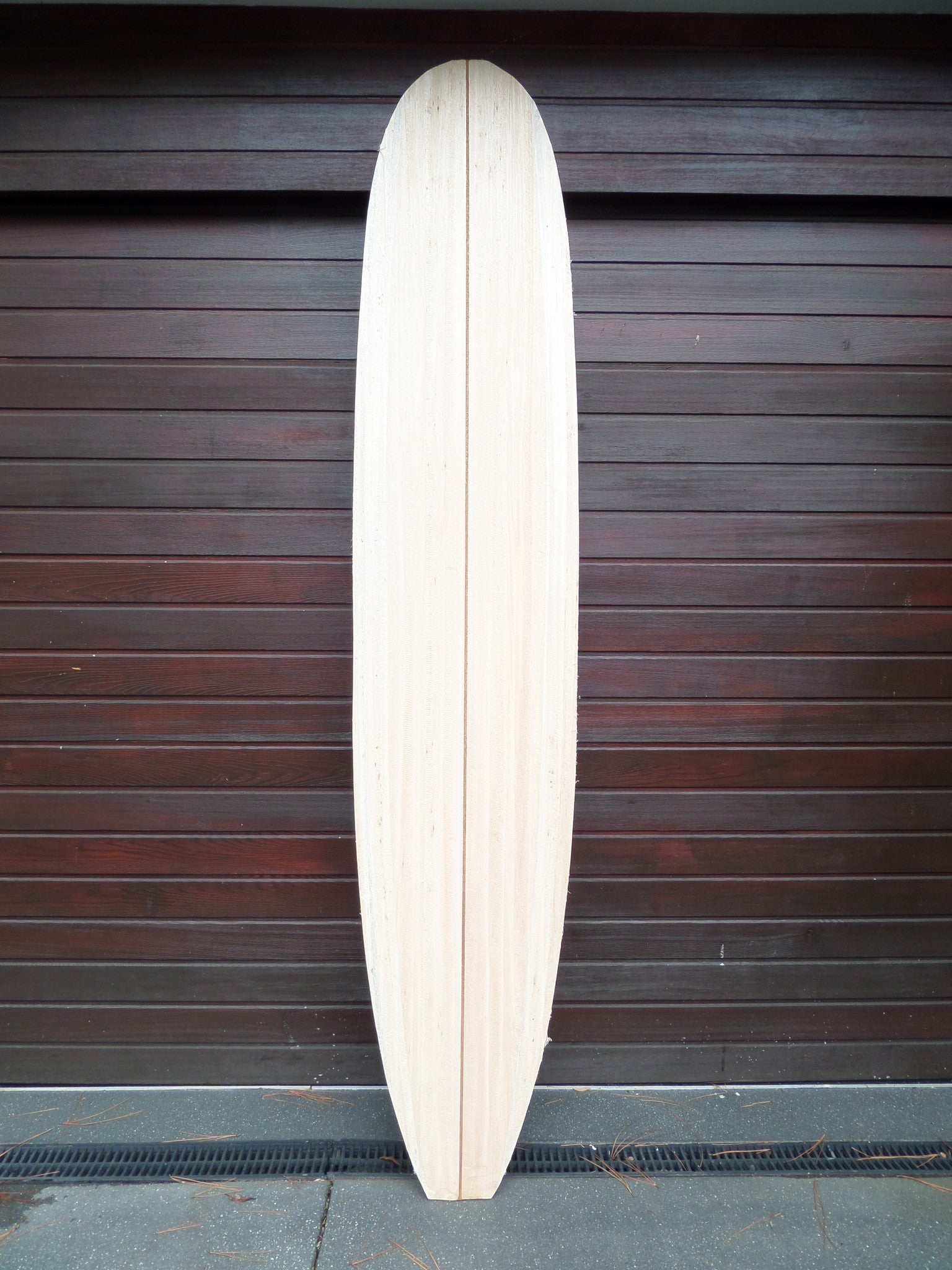
A balsa surfboard blank is the rough, unfinished core you shape into a board. There are three ways to build one:
- Solid construction: layers of balsa wood glued into one dense block. Heavy, classic, and the truest to 1950s boards.
- Laminated construction: thinner wood strips glued into a hollow or semi-hollow shell around a frame. Lighter, but more glue joints to get right.
- Chambered construction: a solid blank with weight carved out from inside. The best balance of classic feel and modern weight.
Solid vs laminated vs chambered construction
Here's how they compare:
| Construction | Weight | Difficulty | Best For |
|---|---|---|---|
| Solid | Heaviest | Beginner | Classic cruisers, collectors |
| Laminated | Light | Intermediate | Custom shapes, weight savings |
| Chambered | Medium | Advanced | Strength plus lighter weight |
One thing to know: balsa is not waterproof on its own. At Riley Balsa Wood Surfboards, we note that balsa must be protected with one layer of 4-ounce fiberglass and polyester resin, and that a properly glassed balsa board will last a lifetime.
If you want to browse ready-to-shape options, our balsa surfboard shaping set or kit includes everything except tools, and our preshaped solid balsa blanks are pre-shaped for you.
Surfboard Shaping Tools and a Safe Work Space
Good surfboard shaping tools do half the work for you, and a clean space does the other half. Balsa dust is fine and light, so set up before you cut anything.
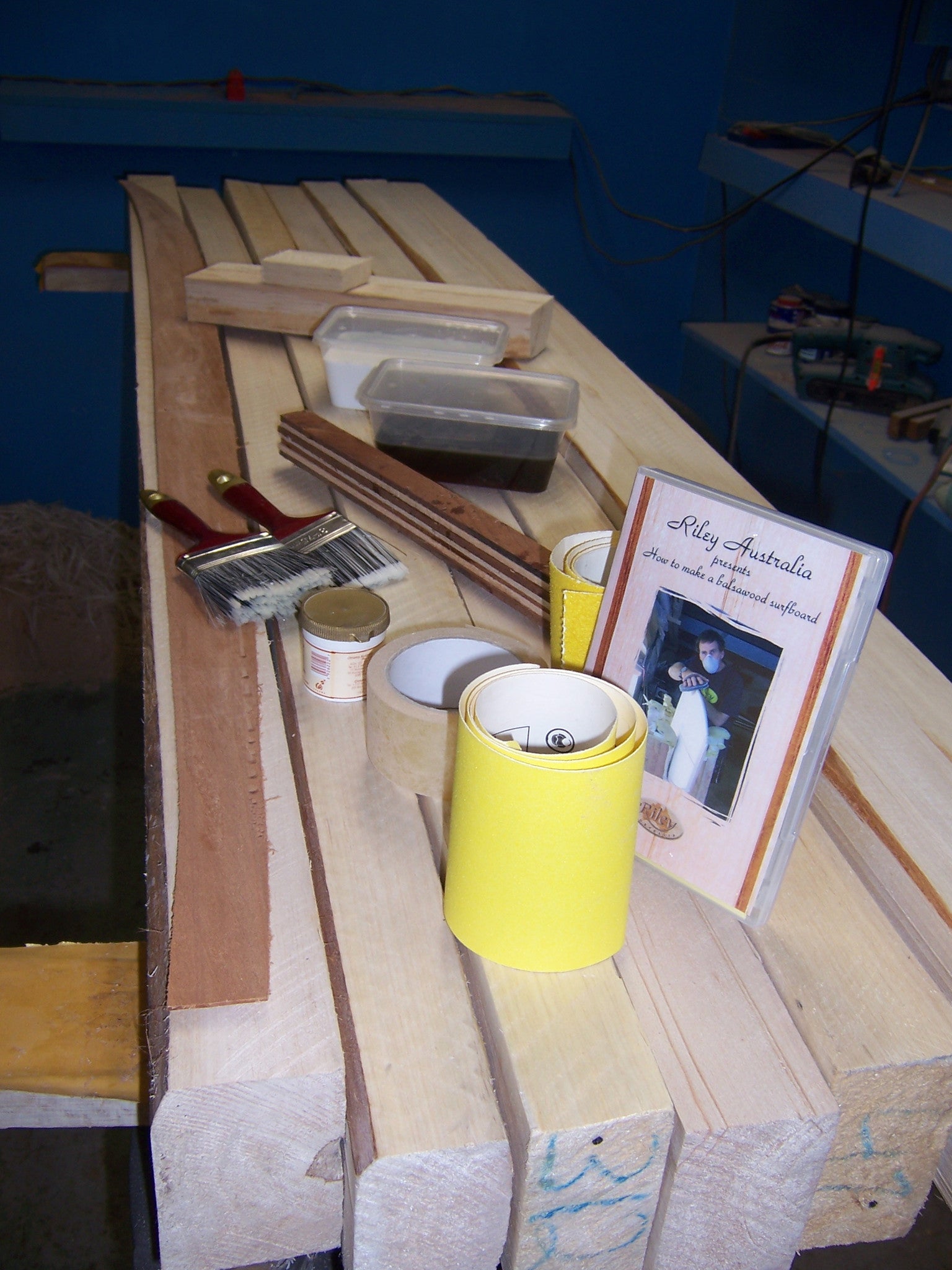
Here's the short list we'd hand any first-time builder:
- A hand plane or power planer for rough shaping
- A jigsaw for cutting the outline
- A combination square for reference lines
- A rocker template and plan shape template
- 60 and 100 grit sandpaper
- Sanding blocks, ideally double-sided
- PVA glue and brushes for glue-up
- Masking tape for rail bands and nose and tail blocks
Our foam and balsa wood shaping and sanding blocks are double-sided and handmade in Australia, with the balsawood side light and easy to sand.
Dust control and personal protection
Balsa dust gets everywhere. A dust mask and disposable overall are included in the solid kit, and you should wear them while working.
How to Shape a Surfboard: The Step-by-Step Sequence
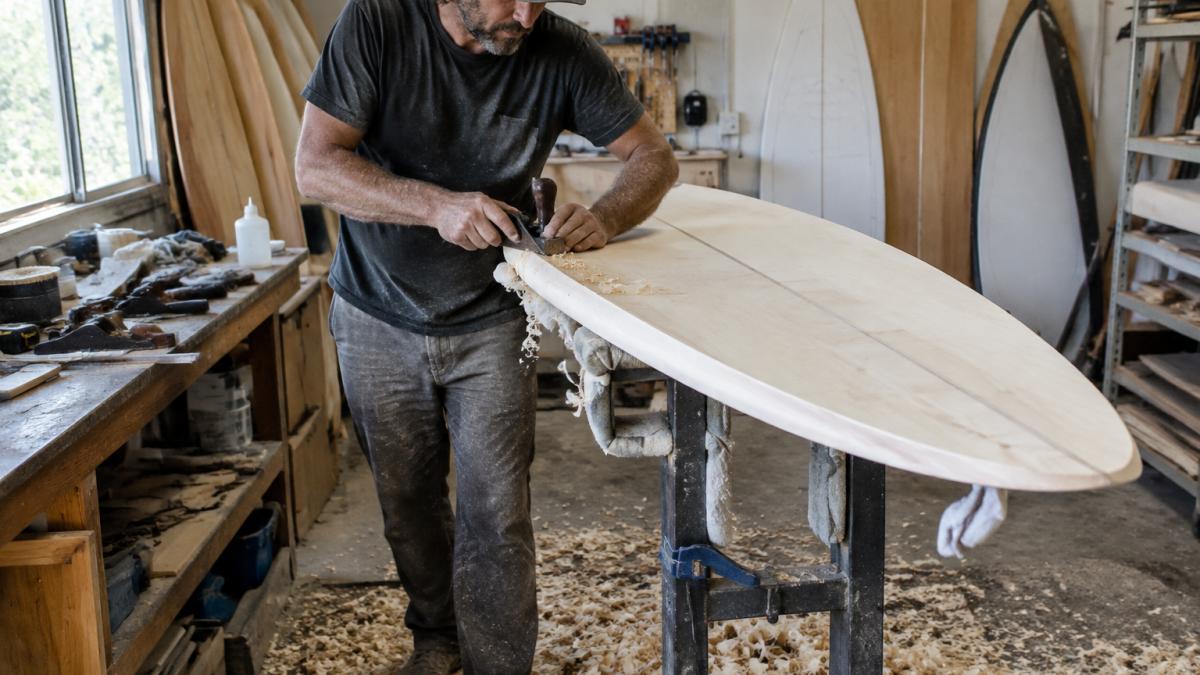
Shaping a balsa board follows a set order: plan the dimensions, prepare and glue up the blank, cut the outline, establish rocker and rails, then refine. Skip a step and you'll fight the wood later. Follow it with checkpoints and the board comes together predictably.
Step 1: Plan dimensions, rocker and outline
For thin boards with a flat rocker, the shaping kits are suitable, and you must draw and cut your rocker on the narrower side of the timber to get the required width in the board.
Checkpoint: Before cutting, confirm your template matches your intended dimensions and that the rocker curve looks fair (no flat spots or kinks) when sighted along the edge.
Step 2: Prepare and glue up the blank
Checkpoint: After cure, lay a straight edge along the length and diagonally across the blank. Any rock or twist means the glue-up was not flat; plane or re-clamp before proceeding.
Step 3: Cut the outline
Checkpoint: Sight down the outline from nose to tail. The curve should be smooth and symmetrical left to right. If you drift inside the line, stop and plan a patch rather than forcing the cut.
Step 4: Establish rocker and rails
Checkpoint: Measure thickness at nose, center, and tail with calipers or a ruler. Compare left and right rail profiles by feel and sight. Balsa removes quickly, so sneak up on your lines rather than cutting to them in one pass.
Step 5: Refine and prepare for glassing
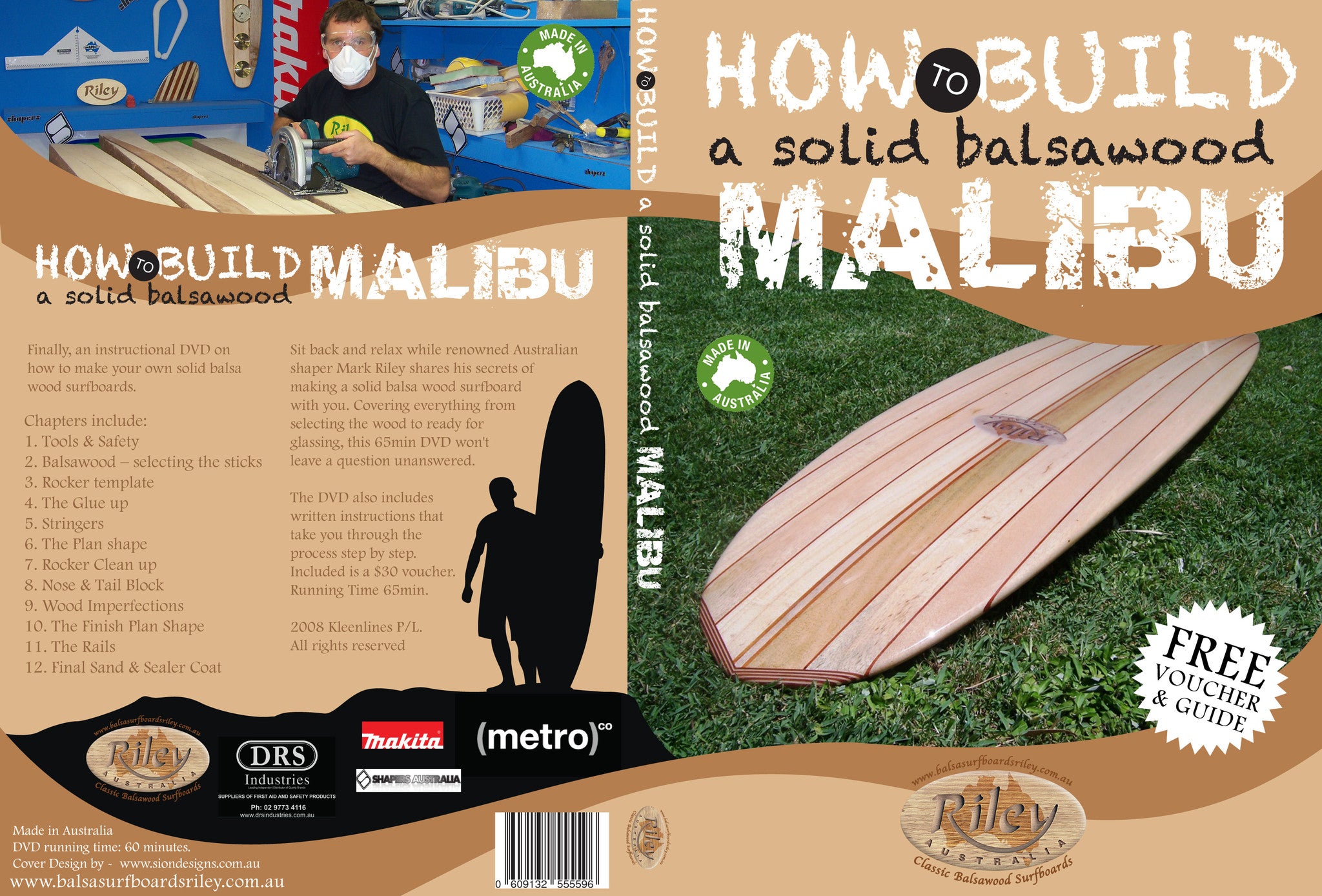
Our DVD guide to making a solid balsawood surfboard covers everything from selecting the wood to ready for glassing.
Chambered Wooden Surfboard: Lightening the Core Without Losing Strength
A chambered wooden surfboard removes weight without hollowing the whole board out. You cut lightening holes, or chambers, into the inside of the blank, then seal it back up. The skin stays thick and strong, but the board gets lighter under your feet.
A few rules keep it safe:
- Leave enough wall thickness around each chamber so the deck doesn't cave in. A common starting point is 3/8" to 1/2" of wall between chambers and at the deck and bottom skins, but thinner walls save more weight at the cost of strength.
- Keep chambers away from the rail line, where impact stress is highest. Leave a solid rail band at least 1" wide on each side.
- Seal every chamber completely before glassing. Any unsealed chamber can trap moisture and cause rot or delamination later.
- Plan chamber layout before you cut. Mark chamber outlines on the inside faces, leave room for glue joints, and avoid creating thin webs that can crack under flex.
Troubleshooting Glue-Up and Shaping Errors Before Glassing
| Problem | Cause | Fix |
|---|---|---|
| Gaps between strips | Uneven edges, too little glue | Re-cut the joint, re-glue, clamp flat |
| Board twisted after glue-up | Uneven clamping pressure | Check with a straight edge, plane back to true |
| Cut inside the outline | Jigsaw drift | Glue on a patch block, re-cut to the line |
| Uneven rails | Skipped rail band marks | Re-tape bands and shape down gently |
| Wood imperfections showing | Knots or grain defects | Fill with balsa-coloured putty before sanding |
Ordering a Custom Balsa Blank or Shaping Kit from Riley
All boards are custom made and handmade in Australia, in Sydney at Cronulla. Riley Balsa Wood Surfboards does not keep any stock, and each board is built to suit every customer's wishes.
Balsa surfboard building can feel intimidating for beginners. The DVD and instructions from Mark make the process hard to get wrong. You can build the board in the workshop with Mark, or buy a kit and build at home, at school, or in your own workshop.
The best way to start is to decide on the board you want to ride and order a blank or kit to match.
Shaping your first balsa board is a real test of patience, and the right blank and guidance make all the difference. Riley Balsa Wood Surfboards builds every blank to order in Cronulla, with world-class balsa grain and sections, DIY shaping kits, and expert support for builders at any level. Get started with Riley Balsa Wood Surfboards and shape a board you'll ride for years.
Frequently Asked Questions
Can you curve balsa wood for a surfboard rocker?
Yes. Balsa bends easily when it is cut into thin strips and glued up over a rocker template. You clamp the strips to the template and let the glue set, and the board keeps that curve. Thick solid blocks are much harder to bend, which is why most builders work from strips or buy a pre-shaped blank with the rocker already cut. Riley Balsa Wood Surfboards pre-shapes solid blanks, and any rocker is possible.
What tools do you need to shape a wooden surfboard?
Riley Balsa Wood Surfboards sells foam and balsa sanding blocks with double-sided velcro so you can flip between paper grades. The solid shaping kit includes sandpaper, PVA glue, gloves and a dust mask.
How do you keep a balsa surfboard symmetrical while shaping?
Draw a centre line down the stringer and measure every outline point from it, not from the opposite rail. Mark your rail bands at the same height on both sides, then shape one side and copy the measurements to the other before you touch the plane. Stop and sight down the board from the nose after every pass. Working to numbers on both sides of the stringer catches lopsided rails early, when a few passes can still fix them.
How do you make a chambered wooden surfboard?
Riley Balsa Wood Surfboards builds solid and foam-core boards. Hollow boards are not offered, as they are difficult to maintain and repair.

0 commentaire