

Quick Summary
To prevent dents in a balsa surfboard, avoid concentrated pressure on the deck, handle and carry it with care, and store it flat on padded support. Balsa is soft, so sharp weight from feet, heels or gear can crack the glass and compress the core.
- Carry the board with one hand on the rail, deck facing away from your body.
- Keep the board off the ground, since dragging it wears the rails and scuffs the glass.
- Use a padded, vented cover to protect the board in transit.
- Store the board flat on a rack or stand, never leaning on its deck or nose.
- Add a clear deck grip layer for extra protection without changing how the board looks.
Table of Contents
- Why Balsa Surfboards Get Pressure Dents
- Handling and Carrying Your Balsa Board Safely
- Storing and Protecting Your Balsa Board's Deck
- Frequently Asked Questions
How to Prevent Dents in a Balsa Surfboard?
Last Updated: November 22, 2026
Why Balsa Surfboards Get Pressure Dents
Pressure dents form when weight concentrates on one small spot of the deck, and feet, heels, or gear can crack the thin glass and core beneath.
Balsa is light and easy to shape, making a responsive board, but it is also soft and gives way under sharp pressure. Balsa is not waterproof, so it must be glassed to protect it from UV and water; a properly glassed balsa board can last a lifetime when the surface stays intact.
Handling and Carrying Your Balsa Board Safely
Carry the board with one hand on the rail, deck facing away from your body, and never tuck it under your arm with the deck pressed against your ribs or a bag strap. Keep it off the ground when you can, since dragging it on sand or concrete wears the rails and can scuff the glass.

A padded, vented cover protects the board in transit. Our vented board cover and bag range suits solo boards and multi-board trips, and a stretch sock also shields the deck from knocks in the car.
Storing and Protecting Your Balsa Board's Deck
Store the board flat on a rack or stand, never leaning on its deck or nose, and check that any rack has padding where it touches the board. Our hand made timber surfboard racks and stands are built to hold a board off the floor. Add a clear deck grip layer for extra protection: clear deck grip tape for surfboards gives traction without changing how the board looks, and it is thin, so it adds no real drag in the water.
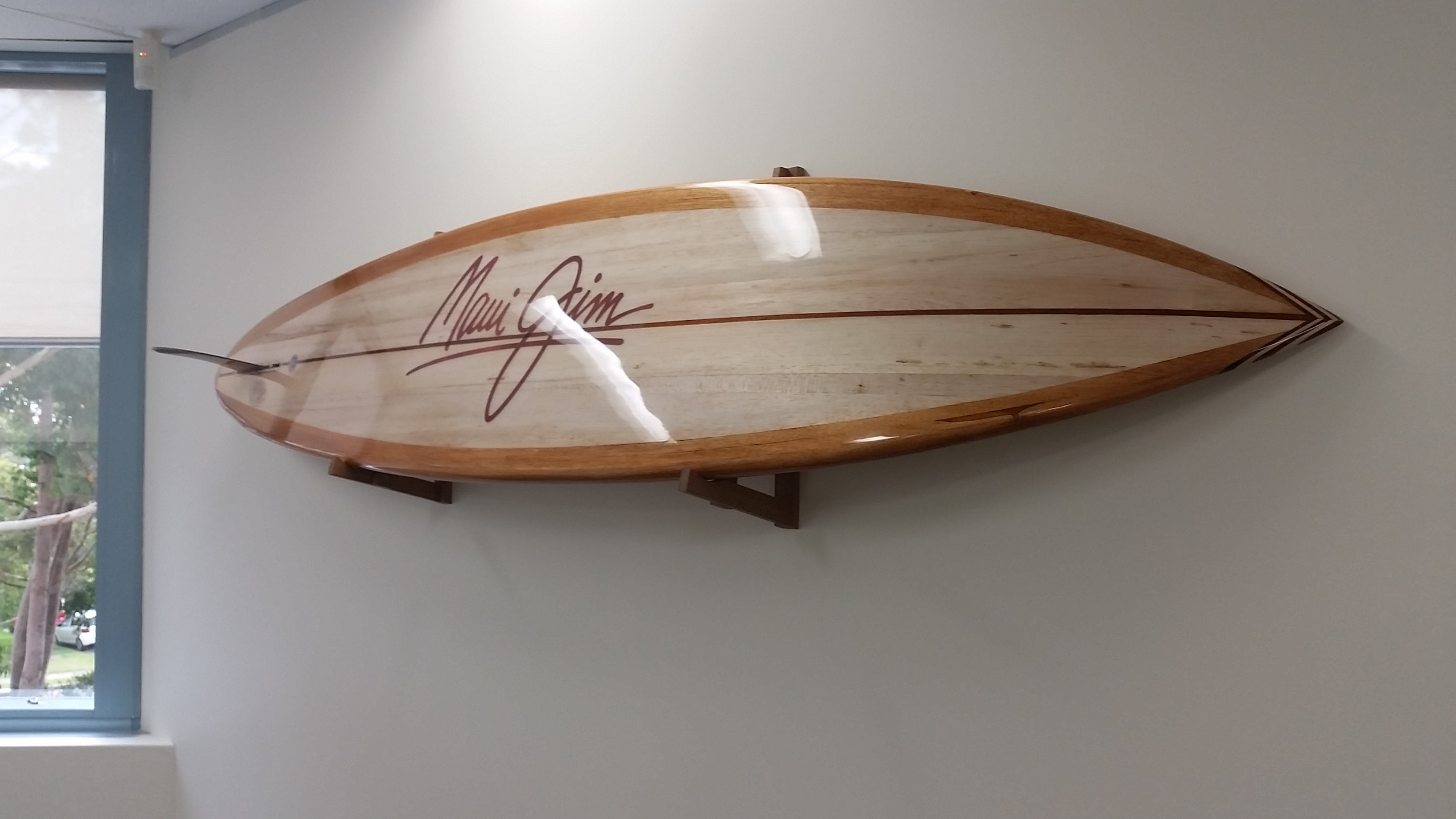
Keep the board out of direct heat and off pressure points.
Storage and protection habits make the biggest difference to keeping the deck intact, and the main points are summarised below.
| Protection step | How to do it | Note |
|---|---|---|
| Store flat | Lay on a rack or stand | Never lean on the deck or nose |
| Check padding | Confirm rack padding touches the board | Padding protects the contact points |
| Clear deck grip | Apply clear deck grip layer | Adds traction, no real drag |
| Heat and pressure | Keep out of direct heat | Avoid pressure points |
Frequently Asked Questions
Is it normal to get dents in a balsa surfboard?
Some small marks are normal with regular use, especially on the deck where foot and knee pressure concentrate. Pressure dents usually come from weight landing on a spot where the glass and core give slightly under load. Dents that stay soft, crack the glass or let water into the core are different and need attention. Glassing the board properly with one layer of 4-ounce fiberglass and polyester resin, as Riley Balsa Wood Surfboards recommends, protects the balsa from water and UV and helps it hold up over time.
Does a surfboard cover help prevent dents?
Yes. A padded, well-fitting cover keeps the board from knocking against car roofs, walls, and other boards during transport and storage. Covers such as the Stretch surfboard covers from Riley Balsa Wood Surfboards protect against dust, dirt, and scratches and feature padded nose protection. Choose a size that matches your board, because a loose cover lets the board shift and bump, while a snug one reduces that movement.
How do you tell a pressure dent from a surfboard ding?
A pressure dent is a soft depression in the deck caused by sustained weight, often from a foot or knee, and it usually has no crack in the glass. A ding is a sharper impact that breaks or cracks the glass and can expose the balsa core. If the glass is intact and the surface is only indented, it is usually cosmetic. If you see cracks, soft spots that feel spongy, or any sign of water intrusion, have the board inspected and repaired before riding it again.

0 commenti